Safety Goal-Setting Tips for a New Year

Goals Cropped with S

Well, it’s time to get back to the grind after a nice holiday break.  It’s also a time for fresh starts and goal-setting for a new year.  It can be tricky to set safety goals in advance – sometimes it’s difficult to quantify how many incidents and accidents were prevented, or will be prevented.   However, there are some solid ways to set attainable goals for safety in your workplace.  Here some tips to set a tone for a very productive and safe year:

Think of safety goals as two categories – Quantitative (numbers) and Qualitative (how are you going to achieve that number?)

For example, start with your company’s injury rate, a quantitative goal – can it be lowered?   What about the number of safety inspections – can the amount be increased?  What about the number of employees participating in your safety program?  All great ways to lay out quantitative metrics.

Okay, you have a number.  Now think, how is your company going to get to that number? Is it by an emphasis program (ie. PPE usage), increased training, increased audits?  Come up with a statement outlining concrete steps or strategies to hit that quantitative metric.  Plan a timeline to carve the metric into smaller chunks that you can target to meet on a regular basis (monthly or quarterly). Measure how well you are performing to that goal, and determine ways to change the game if you’re falling behind your targets.

Look at the low hanging fruit

Are there incidents happening over and over again  or is your facility not in compliance with an OSHA standard?  Are you so perfect, you can’t stand yourselves?  Think of the future with an aging workforce – is it time to implement ergonomic programs to prevent injuries?  What about implementing a behavioral based safety program?

My best advice: include employees in the goal setting process

Hopefully, you have some ideas brewing in your head.   Setting a safety goal that is not achievable can be a huge drag for the rest of year and can also bring the overall effectiveness of your safety program down.   Employees can give great feedback, and involvement and can also motivate participation in strategies to achieve the safety goals.


Fall Protection Planning

fall protection

Falls from heights is one of the number one reasons workers are killed on the job and the most cited violation by OSHA.  Fall protection requirements can be easily overlooked in a brewery operation.  Areas to look around for fall risks are:

  • Mezzanines (if someone is on the mezzanine receiving a load when the railing is removed).
  • Scissor lifts – workers always should be tied off when working from the platform (think catapult – things in motion want to stay in motion)
  • Climbing to higher heights (leaving the ladder)

Keep in mind calculating fall distance when planning for a job needing fall protection.   For instance, a shock absorbing lanyard is a poor choice in areas where fall distance is short.  The worker would most likely hit the ground before the lanyard would engage.  Miller Fall Protection has a great tool to calculate the fall distance and help choose the best protection:

https://www.millerfallprotection.com/fallclearance/#home0

Attached is a list of the OSHA general industry standards indicating fall protection requirements (ie. manlifts, guarding floor openings, ladders, PPE, etc).  Remember state by state plans may even have more stringent rules.

https://www.osha.gov/SLTC/fallprotection/standards.html

Hoppy Holidays!

Janet


Fire Safety Tactics You May Not Know

lego fire fighter

Yes, it is November and October is typically fire safety month (to correspond with the Great Chicago Fire of 1871) but it’s never too late to review fire safety.  Here are a few tips:

#1:  Do the Opposite – Teach your employees how to shut off the fire suppression system.   Seems odd, but if a shower head gets knocked by the mast of a fork truck, it’s a good thing to know to minimize damage.  Label the shut offs and shoot a short video with iMovie.  It’s a great idea to show this process to new hire employees, and to review it annually with everyone.

#2:  Train Annually – Did you know employers providing portable fire extinguishers for employee’s use in the workplace need to provide initial training and annually thereafter?  Ask the company that maintains your fire extinguishers to put aside some the extinguishers that have just fallen below the recharge line so that your employees can practice discharging them.

#3:  Give a tour of your facility to your fire department – A tour for the fire department gives first responders a lay of the land so that they aren’t entering your facility as a complete unknown if there is ever an emergency.  And, it can create relationships you can leverage to help with your internal safety training.

OSHA Fact Sheet on Fire Prevention

https://www.osha.gov/OshDoc/data_General_Facts/FireSafetyN.pdf

OSHA’s Training Requirement of Portable Fire Extinguishers

https://www.osha.gov/pls/oshaweb/owadisp.show_document%3Fp_id%3D9811%26p_table%3DSTANDARDS

4 Tips for Developing a Safety Culture at Your Brewery

Grimes electrical

Although developing a safety culture takes a great deal of effort and time, here are some tips to get your brewery on the right track:

Tip # 1 – Open communications with employees

Give employees an open way to communicate safety issues.  Don’t wait for employees to tell you.  Ask questions at production meetings, such as, “I noticed safety glasses are not being worn, any reason why?”  When asked, employees will tell.  

Tip #2 –  Be an example

There is nothing worse than telling someone else what to do, then not following the same rules.  Not cool.

Tip #3 – Be positive

When correcting a safety behavior, be positive first, then point out a way to improve.  Nobody likes getting a lecture on the job.  

Tip #4 – Care

The whole reason for creating a safety culture is because you care about your employees, and employees should care about the people working around them.  Encourage employees to speak up when they see risky conditions or behavior.  Point out that this will save someone from getting injured, and give them the ability to hold their kids or pet their dog when they get home.

Hey Chi-Brewers! Catch the 27th Annual Chicagoland Safety, Health and Environmental Conference

ChiBrochureCover2015

The early bird registration for the Chicagoland Safety, Health & Environmental Conference ends tomorrow.  Conference is in Naperville, Sept. 21-24th.   There are many applicable sessions to the brewing industry.  Here are some of my suggestions:

  • Sept. 22nd – Process Safety Management (PSM) – My two cents -this is the most cited standard by OSHA among breweries. 
  • Sept. 22nd- Administrating a Respirator Protection Program
  • Sept. 23rd – There is an App for that!  Using your smart device to improve EHS performance – Went to this session before, it was amazing!
  • Sept. 24th – Combustible Dust

To register go to:  http://cshc.us/

Hope to see some brewery folks there!

Why Breweries Should Know the Number 312120

FullSizeRender (18)

What the heck is the number  312120???  It’s the NAICS (North American Industry Classification System) code for breweries. OSHA compiles citation and injury data for different industries using NAICS codes, then makes the data available to the public.

From October 2013 through September 2014, $141,960 in penalties were issued to breweries for OSHA related violations. Now that is a lot of beer down the drain!  Over $100,000 of the penalties issued were violations of the Process Safety Management Standard.

To check OSHA stats such as citation and injury data for breweries (NAICS code: 312120), go to:

https://www.osha.gov/oshstats/index.html

Brewers Association Releases Confined Space Best Management Practices for Breweries

Confine Space Brewers Association

Kudos to the Brewers Association Safety Subcommittee for releasing “Best Management Practices for The Management of Confined Spaces in Breweries”.  Don’t know what may be a confined space at your brewery?  Look at your fermenters, grain bins, silos, mash tuns, kettles and yeast propagation tanks.  Actually, anything associated with the the word “tank” is a good place to start, or places that creep you out.  Also be sure to look at trailers used for fresh or spent grains.

OSHA confined space standard 29CFR1910.146 defines a confined space as the following (all three criteria must be met in order to be considered a confined space):

  • An area large enough and so configured that an employee can bodily enter and performed assigned work, and
  • Has limited or restricted means of entry or exit and
  • Is not designed for continuous occupancy

The Brewers Association BMP offers some great solutions to eliminate the need to enter confined spaces such as:

– Placing “clean in place” systems to allow cleaning and sanitation without entry

– Conducting inspections with the use of mirrors or video cameras

– Using tools such as long-handled gripper tools and scrubbers

To view the entire Brewers Association’s BMP for the Management of Confined Spaces in Breweries go to:

https://www.brewersassociation.org/best-practices/safety/confined-spaces/

Cheers!

Janet

Forklift Training Requirement

forktruck

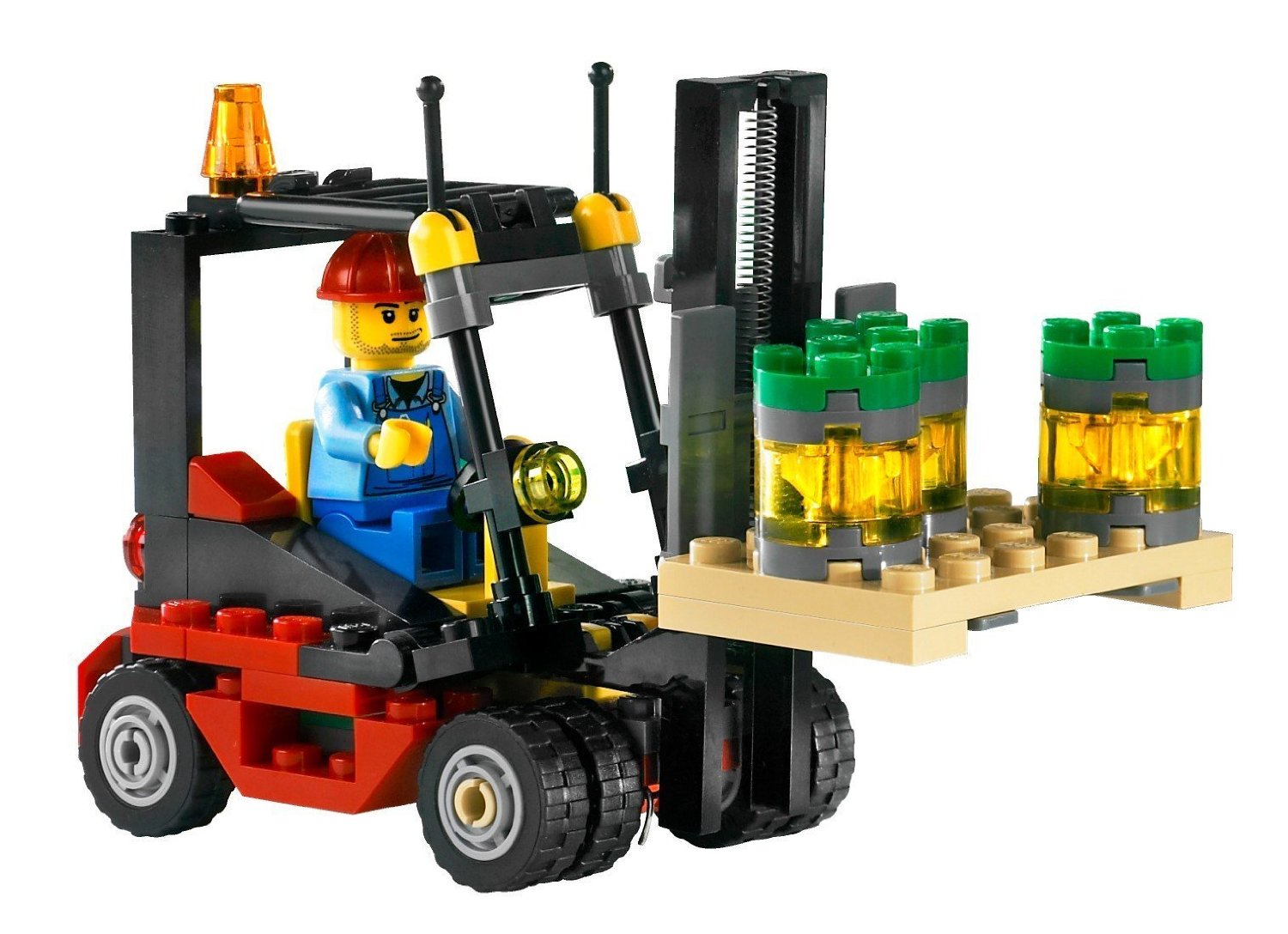
Is forklift spelled “forklift” or “fork lift” auto correct didn’t correct it so I guess you can go either way.  Regardless, did you know forklift drivers must be trained and certified to operate a forklift at your brewery?  Also, according the OSHA Powered Industrial Trucks standard, an evaluation of the forklift driver’s performance shall be conducted at least once every three years.  Therefore, the license/permit must be renewed every three years.  Feeling a bit overwhelmed?

To start tackling this issue, ask your forklift vendor if they will conduct the practical portion of the training on the particular forktruck type you have at your facility.  For the formal portion of the training, OSHA has eTools for powered industrial trucks your competent trainer can use to train your folks.  Also, keep good training records with reminders set when the three year renewal will be coming up for your driver.

To refer to the OSHA Powered Industrial Truck standard, go to: https://www.osha.gov/pls/oshaweb/owadisp.show_document?p_table=STANDARDS&p_id=9828

OSHA Powered Industrial Truck eTools: https://www.osha.gov/SLTC/etools/pit/index.html

Driver’s Course example (make it fun!):

Click to access pit_drivers_safety_training.pdf

Cheers!

Can you really slip on a banana peel?

Frozen slipping

Seriously, how many people slip on a banana peel?   According to Mythbusters it take a lot of decaying banana peels to slip.  However, falls are one of the leading causes of unintentional injuries in the United States, accounting for approximately 8.9 million visits to the emergency department (2011 National Safety Council Injury Facts).  Think about when you slipped on a puddle or ice and looked around to see if someone saw you!

Preventing slips, trips and falls are pretty easy.  Just stay on top of it.

  • Once surfaces are wet, there is very little traction. Don’t assume the ground is always dry.  If you see a puddle, mop it up.
  • Use spill blankets from spill kits to soak up oil but also let the maintenance department know so they can figure out what piece of equipment or pipe is leaking.
  • Always keep aisle ways free and clear.   Wrap up cords and hoses if you see them.
  • Make sure to see your feet when going down stairs (laundry baskets anyone?).
  • Use good footwear for the right traction.  Check the treads on your chucks.   Chris-cross pattern is good with rubber soles.
  • Remember:  When a floor is wet, the type of shoe can do very little.  Be clean!

Make a Rocket Instantly: Compressed Gas Safety

Rocket Marvel

Compressed Gas Cylinder Safety:  Whether welding or cutting or using CO2, compressed gases must be respected.  Compressed gas cylinders can become rockets due to the high amount of pressure these gases are under in these cylinders.  So give some R-E-S-P-E-C-T.
– Secure cylinders at all times
– Cap valves when cylinders are not in use
– Use carts designed for moving cylinders
– Always inspect for dents/damage, send back to the vendor immediately when damage is discovered.

OSHA regulatory requirements for compressed gases are found in several standards.  Training is required and a best practice for employees handling compressed gases.

P.S. If you don’t believe me a cylinder under pressure can become a rocket, watch this video, you’ll get the drift in just a few minutes: